 Göreme City Guide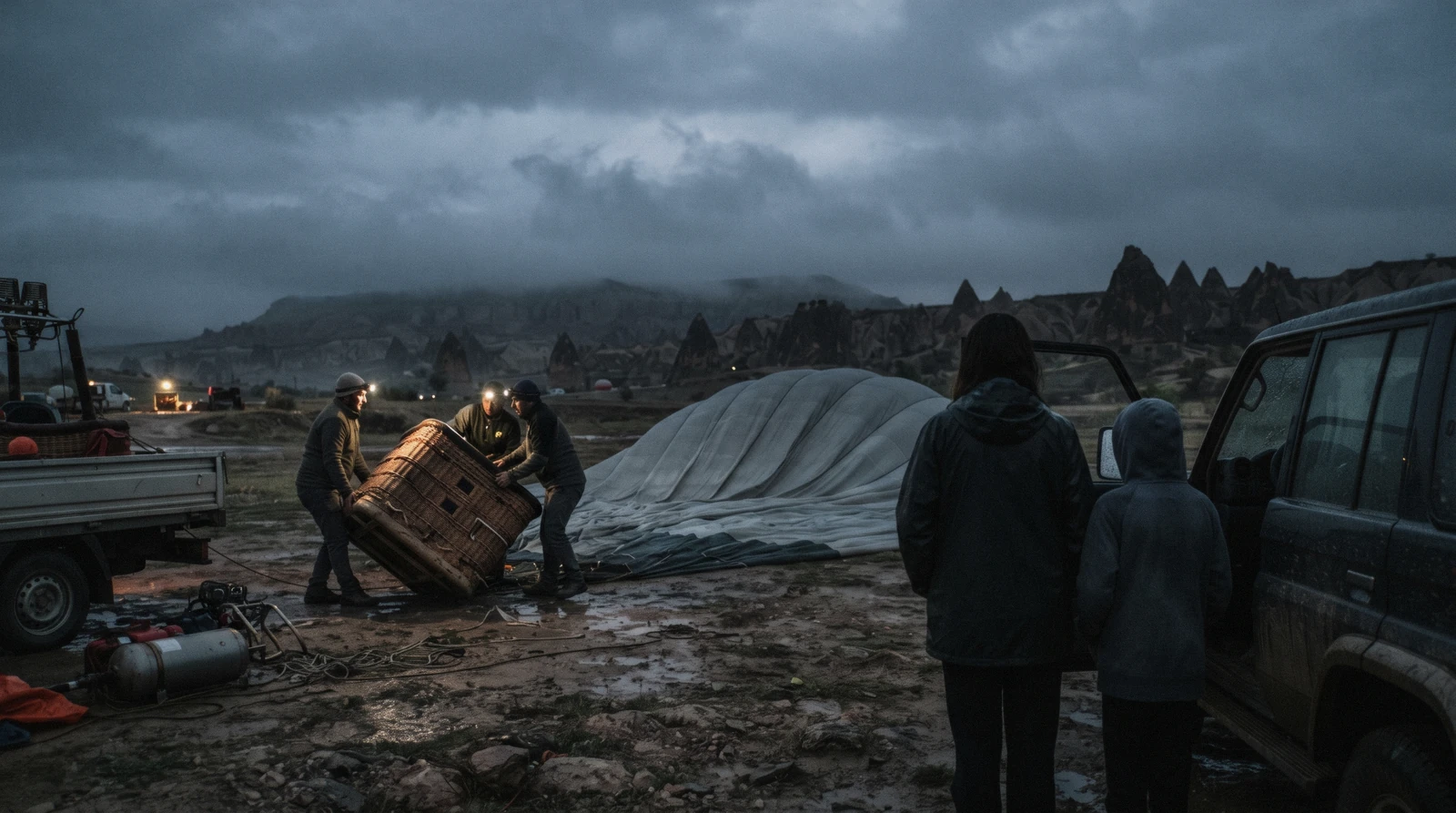
Cappadocia Balloon Weather: Why Flights Cancel and What Happens Next
Balloon mornings in Cappadocia are decided by weather, and the decision is official. This page explains Cappadocia balloon weather: who clears each dawn, which seasons fly most, why balloons never fly at midday, and exactly what happens to your money when Cappadocia balloons are cancelled. Start with how Cappadocia balloon flights work, pick your month with the best time to visit, and let the Göreme city guide carry the rest of the plan.
Quick answer Who clears each dawn, the flyable-day claim, and what a grounding costs you
Balloon flights in Cappadocia are cleared dawn by dawn. The Turkish civil aviation authority, SHGM, keeps a representation office in Cappadocia that approves flights when weather is within limits, and flights proceed only on the joint green-flag (yeşil bayrak) decision of the operator and the responsible pilot after a meteorological evaluation. Operators claim about 260 flyable days a year, an operator figure rather than an official statistic. The other dawns fall to wind, fog, rain and snow. When weather cancels the flight you get a full refund, and most operators allow free written cancellation up to 48 hours before, so a grounded morning costs you time, not money.
Key takeaways
- The cheapest way to hold a flyable dawn is the Nazar small-group sunrise flight at $90.03, refunded in full when weather cancels.
- The 48 hour free written cancellation is what makes a two-dawn plan close to riskless, and how far ahead to book sets the timing.
- Book for your first morning and keep a spare morning, the plan that survives a grounded dawn is in the 2-day itinerary.
- No official cancellation statistic exists, the ~260 flyable days figure is the operators' own claim.
The Four Seasons As Flying Seasons
Flyability is a climate question before it is a luck question. The figures below are the ERA5 1995 to 2024 averages for the Göreme valley, and the commonly quoted 260 flyable days is the operators' own claim rather than an official statistic.
| Season | Flyable-dawn character | The climate facts | The booking read |
|---|---|---|---|
| Spring (Mar to May) | Showery and unsettled. April runs showery with wind spells, March is the wettest month of the year, so expect more grounded dawns than autumn. | March 55.5 mm rain over 11 days, April 16.9°C high with 50.8 mm, May 21.7°C high with 50.4 mm. All ERA5 1995 to 2024 averages. | Good availability but book flexibly. The 48 h free cancellation window is your friend here. |
| Summer (Jun to Aug) | The most reliable clearances of the year. Stable anticyclone weather, dry air, calm dawns. | July 30.4°C and August 30.7°C highs, the driest months at 4.4 mm, nights around 15°C make the 04:00 pickups mild. | Book early. Demand spikes and the sky is full every morning. Confidence is highest in these weeks. |
| Autumn (Sep to Nov) | The reliable shoulder. September and October stay dry and stable before November turns changeable. | September 26.0°C high with just 13.9 mm, October 19.7°C with 25.2 mm, November 13.0°C with 32.8 mm. | Probably the best balance of clearance odds, mild mornings and crowd levels in the whole calendar. |
| Winter (Dec to Feb) | The fewest flyable dawns, but clear frozen mornings fly beautifully. Fog and snow ground more mornings than in any other season. | December 7.8°C high and −2.2°C low, January 5.5°C high and −4.4°C low, precipitation 40.8 mm in December and 46.6 mm in January. | Book the first night, hold a spare morning, and dress for standing on frozen ground before sunrise. |
Climate figures are ERA5 1995 to 2024 averages for the Göreme valley. The roughly 260 flyable days against about 100 grounded ones is the operators' own claim, read in Q3 2026.
How The Go/No-Go Actually Works
Visitors often assume a cancellation means the company got scared. The truth is bureaucratic in the best sense. A state authority sits in the valley, a written instruction governs the decision, and a named pilot signs up to it each dawn. Understanding the machinery turns a grounded morning from a grievance into a system working as designed. The full flight experience this machinery protects is described in our Cappadocia balloon flights guide.
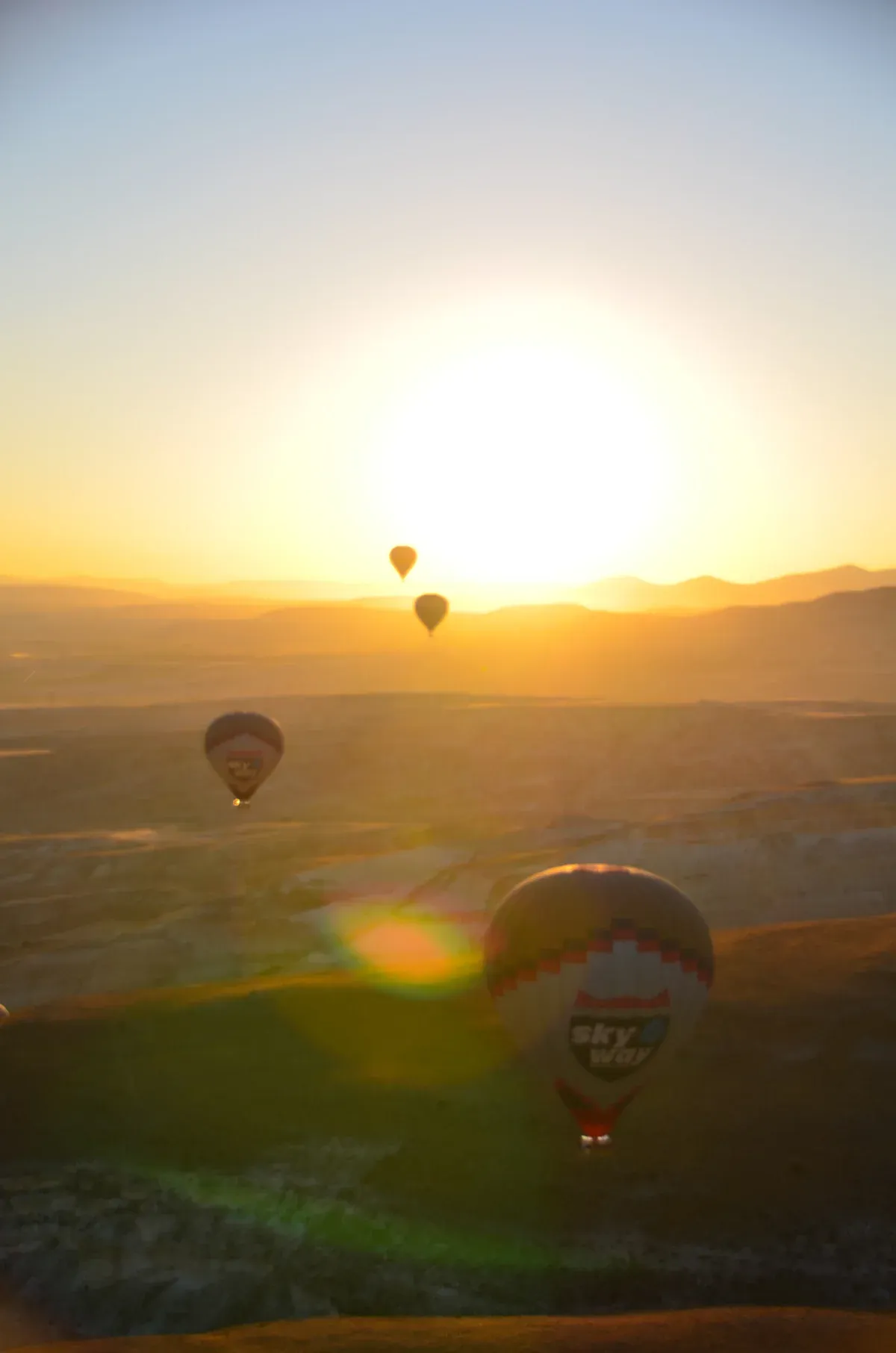
Photo: Kyle Lamothe, CC BY 3.0, via Wikimedia Commons
The authority in the loop
The Turkish civil aviation authority, the Sivil Havacılık Genel Müdürlüğü or SHGM, keeps a representation office in Cappadocia that gives approval for balloon flights when the weather conditions are within limits. Royal Balloon's FAQ states this plainly, and it matters: the approval applies to all hot air balloon companies in Cappadocia, not just the big names. On top of the official layer sits the yeşil bayrak, the green-flag system written into the SHT-BALON commercial balloon operations instruction.
After a meteorological evaluation, a flight may proceed only on the joint decision of the operator and the responsible pilot. Two signatures, one green flag. If either party withholds it, the fleet stays on the ground.
This is why a grounded morning in Göreme is a safety decision with an official behind it, and why no reputable operator will fly on a dawn another company has cancelled. The system is also why cancellation rates differ so little between operators. They all answer to the same office and the same flag.
The areas and the slots
The sky over Göreme looks gloriously chaotic at dawn, but it is rationed. Commercial passenger balloon operations are allowed only in areas published as balloon flight areas in the Turkish AIP, and the maximum number of balloons allowed in each flight area is set in the AIC. SHGM allocates slots to each operator within those caps.
So when a hundred balloons fill the horizon, that is not a free-for-all, it is a scheduled use of defined airspace at approved density. The slot system has a weather consequence worth knowing. Flights do not shift to later or earlier windows when the dawn looks marginal.
The published areas and slot structure are built around the stable dawn window, so if the dawn fails the go, the day fails with it. There is no 10 a.m. fallback fleet waiting for better light, because the afternoon air is a different and unsuitable animal, as we explain below. The caps also explain the booking pressure.
Slots are finite, dawn is the only product, and demand spikes hard around the religious-holiday long weekends and the summer weeks.
What actually grounds a morning
Four archetypes ground a Cappadocia dawn. Wind above what the pilots judge safe is the commonest. Fog that kills the visibility the envelopes and baskets need.
Rain, which cools the envelope and destabilises the flight. And snow, which in practice grounds crews because snow on the fabric valves and the inflation field makes the launch itself unworkable. A fifth quiet killer is the sun itself, once thermals start, but that governs the time of day rather than the go decision.
Here is the finding you will not read on most travel blogs: no official numeric wind or visibility thresholds for Cappadocia balloon flights are published anywhere. The thresholds live in pilot judgment under the green-flag system. The regulation sets the decision structure, the meteorological evaluation and the joint sign-off, not a knots figure you can check against a forecast app.
That is precisely why the SHGM representation office exists, to put an official eye on conditions that a single number could never summarise. Treat any website quoting an exact wind limit for Cappadocia balloons as guessing.
Who the flag clears, and who it does not
The clearance covers the flight, not every passenger. Every operator refuses children under six, and pregnant travellers are not accepted either, rules the companies print plainly and enforce at pickup. Everyone else gets the same shape of morning: about an hour airborne, three to four hours door to door including transfers, inflation and the post-flight ceremony.
If your party includes a five-year-old, plan the roof-terrace version of the dawn instead, and read the family guide for how that works in practice.
What Happens To Your Booking
A cancellation rule you can trust is worth more than a slightly cheaper ticket. Cappadocia's operators have converged on a weather norm that is unusually passenger-friendly, and the booking platforms layer their own terms on top. Know which layer you bought before you travel.
The weather cancellation
The norm across the valley's established operators is simple: when the flight is cancelled due to weather, the full amount paid is refunded. Kapadokya Balloons' FAQ states it directly, and the major OTA listings carry the same promise in their weather notes. Exact mechanics depend on where you booked.
Book through a platform and the refund lands back on your card through that platform's process, on the platform's timeline. Book the operator directly and the refund follows the operator's own procedure. The details vary, the guarantee does not: weather cancels, you get your money back.
What a refund does not buy back is the morning itself, which is why the booking strategy later on this page matters more than the refund policy. A full refund in an airport queue on departure day is cold comfort.
The 48 hour rule
The same operator norms give you a cancellation right of your own. Free written cancellation up to 48 hours before the flight is the standard among the established companies, again per Kapadokya Balloons' published terms. Inside 24 hours of the flight, or if you simply do not show up, the full charge applies.
Read that combination carefully, because it is a gift. It means you can book a dawn months ahead, hold the slot through the busy season, and still walk away free if your plans change with more than two days' notice. The written part matters.
A verbal change at your hotel desk is not a cancellation under these terms, an email or a platform message is. Always cancel in writing, always keep the confirmation. Note that terms are set per operator, so the norm above is the norm, not a law.
Check the listing you actually buy.
What a flight costs, and why operators publish no prices
Here is a finding that surprises everyone: the big operators publish no prices of their own. Royal Balloon's own site asks you to request special rates, Kapadokya Balloons' FAQ shows no price list, and Butterfly Balloons' prices page is not statically published. The street prices you can actually compare are OTA listings, and those are the figures below.
The current spread runs from Nazar Balloons at $90.03, the lowest listed among the valley's big names, through the Discovery Balloons sunrise flight at $103.04, to Royal Balloon at $128.62, where $34.59 of mandatory on-site extras bring the true all-in to $163.21 per person. That Royal figure is the one to study before any balloon booking anywhere. A listed price that omits mandatory extras is not the price.
Ratings run high across all three, from 4.9 with over six thousand reviews on Discovery to 4.98 on Nazar and Royal..
The Booking Strategy
Given the weather odds, the correct response is not to gamble on a single dawn but to structure the trip around two. The refund and cancellation norms make this nearly free to do, and it converts the single biggest risk of a Cappadocia trip, the grounded morning, into a rounding error.
First night plus spare morning
Book your balloon for the dawn of your first full night in Göreme, and keep at least one further morning in reserve. If dawn one is grounded, you rebook for dawn two and the refund for the first flight arrives under the weather rule. If dawn one flies, you cancel the spare or simply never book it.
Either way you have doubled your chances without doubling your cost, because weather cancellations refund in full. The 48 hour free written cancellation closes the loop: a two-dawn plan is close to riskless, since you can drop the backup flight free of charge up to two days out once the first flight has succeeded. The one thing this plan cannot survive is a one-night visit.
If you land in the evening and fly out at noon, a grounded dawn ends the project. Two or three nights is the honest minimum for anyone who genuinely wants to fly. We cover the lead times and the demand calendar in how far ahead to book a Cappadocia balloon.
Demand spikes hard around the religious-holiday long weekends and the summer weeks, and a single grounded week can empty a whole month's calendar, so the two-dawn structure also protects you against scarcity, not just weather.
What a grounded morning becomes
Plan the spare morning as if it were the trip's best morning, because a dawn you are awake for anyway is a terrible thing to waste. The grounded version of a Cappadocia dawn is quiet and beautiful in a different register: empty viewpoints, valley walks with no balloons overhead and no crowds at the gates. Göreme puts the Open Air Museum, Pigeon Valley and Rose Valley within walking distance of most cave hotels, and our two days in Göreme itinerary is built to slot a museum morning exactly where a grounded dawn falls.
Winter travellers should read our Cappadocia in winter guide for the snow-day version of the same plan, when a warm cave café and a museum beats a frozen viewpoint. The psychology matters too. Travellers who arrive with a written plan B report cancellations as a footnote.
Travellers whose whole trip hinged on one dawn report them as a tragedy. Write the plan B before you arrive.
The Winter Truth
Winter is when the weather question gets serious, and also when the honest answer is more interesting than the warning. Fewer dawns fly. The ones that do are extraordinary. Here is how the trade-off actually breaks down.
Fewer flyable days, colder pickups, still worth booking
Winter runs the fewest flyable dawns of the year. ERA5 averages put December nights at −2.2°C and January nights at −4.4°C, and those freezing dawns produce the no-go archetypes more often: fog settling in the valleys, snow on the fields, precipitation in every form. Snow on the valves and inflation areas grounds the fleet in practice, since a launch cannot proceed over frozen, snow-covered equipment.
But the flip side is real. The clear frozen mornings, the ones where the high pressure holds and the air is still, fly beautifully. Cold dry air is stable air.
The light sits low all morning, the valleys are dusted, and the balloon count in the sky is a fraction of the summer swarm, which many photographers count as the best light of the year. Book for winter with the same two-dawn plan and the same refund protections, dress for standing still on frozen ground before sunrise, layers, gripped closed shoes, hat and gloves, and read our Cappadocia in winter guide for the rest of the season's logistics. You will not fly as reliably as in July.
When you do fly, you will remember it longer.
The seasons, one more time, in two sentences
Summer buys you certainty at the price of heat, crowds and the fullest skies, with the dry anticyclone months delivering the most reliable clearances of the calendar. The shoulder seasons of autumn and late spring trade a little of that certainty for milder mornings and thinner crowds, which for most travellers is the better bargain, as our best time to visit guide sets out month by month.
Why Balloons Do Not Fly At Midday
The commonest follow-up question after a cancellation is the wrong one: why not fly later in the day when the weather improves? Because in Cappadocia the middle of the day is precisely when the air becomes unflyable, whatever the sky looks like.
Thermals, the midday enemy
Balloons do not fly in the middle of the day because thermals and convective wind make the envelope uncontrollable at that hour. Once the sun heats the plateau, columns of rising air and turbulent eddies form over the rock formations and the valley walls, and a balloon, which steers only by finding calm layers of air at different altitudes, loses the smooth air it depends on. A ground wind that looks gentle at noon can hide violent vertical movement a few hundred feet up.
This is a qualitative physical fact of the landscape, not a scheduled restriction, and it is why no operator anywhere in the valley offers a midday product. Dawn is the stable window: the air has spent the whole night cooling and settling, the thermals have not yet switched on, and the pilots have their one calm sheet of atmosphere to work with. When the dawn window fails the green-flag test, the day has no second window.
That is the whole reason a grounded morning is a lost morning rather than a delayed one.
The day shape this imposes
The physics dictates the timetable. Pickups run before first light, in the 04:00 to 05:00 band across the year, inflation happens in the dark on the launch fields, the flight rides the dawn, and landings are done by mid-morning. Door to door the whole thing runs three to four hours: about 30 minutes of hotel pickup, 30 minutes of inflation, roughly an hour airborne, around 30 minutes for the post-flight celebration and 30 minutes back to your hotel.
By the time most visitors have finished breakfast, the flying day is over. This shapes the rest of the itinerary more than people expect. Mornings after a flight are for recovery and a late start, mornings after a grounding are for the museum plan, and every afternoon is fully available for valley walks, viewpoints and the towns of the region, which is exactly how our two-day Göreme itinerary sequences things and how the month-by-month plan in the best time to visit is built.
Cappadocia is a dawn town and an afternoon region. Plan both halves and a cancellation stops being a hole in the day.
Drones And Other Aircraft
The dawn sky is shared airspace, governed by the same authority that clears the balloons. Travellers bringing drones, and travellers photographing the balloons, both need to understand the rules before they launch anything.
The drone rule
Turkey regulates drones through SHGM, the same civil aviation authority that approves the balloon flights. Anyone flying a drone of 500 grams and above in Turkish airspace must register in SHGM's system and obtain SHGM approval. Outside the designated free, green zones, flight permission is mandatory for all drone flights, and the zone map is only published through SHGM's interactive map application, so there is no simple static list telling you that a given Göreme valley is a green zone.
The practical rule for visitors is to assume permission is needed over the Göreme valleys and to verify on the official map before flying. And there is one absolute: never launch a drone at the dawn launch fields among the balloons. That is working airspace full of envelopes, burners and slot-timed traffic, and a drone there endangers the flights and breaks the airspace rules at the same time.
Our broader safety and scams guide covers the other practical traps of the region, from photo-spot pressure to unofficial ticket sellers.
The airspace reality
It helps to see the dawn sky for what it is: a working airspace, not a photo backdrop. Commercial flights operate only in areas published in the Turkish AIP, the balloon count per area is capped in the AIC, operators fly on allocated slots, and every single launch sits under the green-flag clearance of the authority's Cappadocia office. Every envelope you photograph is inside that structure.
This is also why you cannot simply hire a balloon on the morning for an unscheduled hop, why flight paths follow the same general patterns day after day, and why the launch fields are organised, marshalled and busy in a specific window rather than scattered across the dawn. For the traveller, the implications are simple and useful. Keep to the field edges where crew direct you, follow your pilot's brief at inflation, and treat the choreography you watch from a viewpoint as the visible part of a tightly regulated system.
It is the tightness of that system, more than anything else, that has kept Cappadocia's balloon record what it is.
The Listings, Compared
The listings compared below carry the same weather protection: they fly only when the civil authority clears the dawn, and they refund in full when it does not. They differ in listed price, true all-in cost and basket style. Remember that the operators themselves publish no prices, so these OTA listings are the street prices, and the Royal figure only becomes honest once its mandatory extras are added.
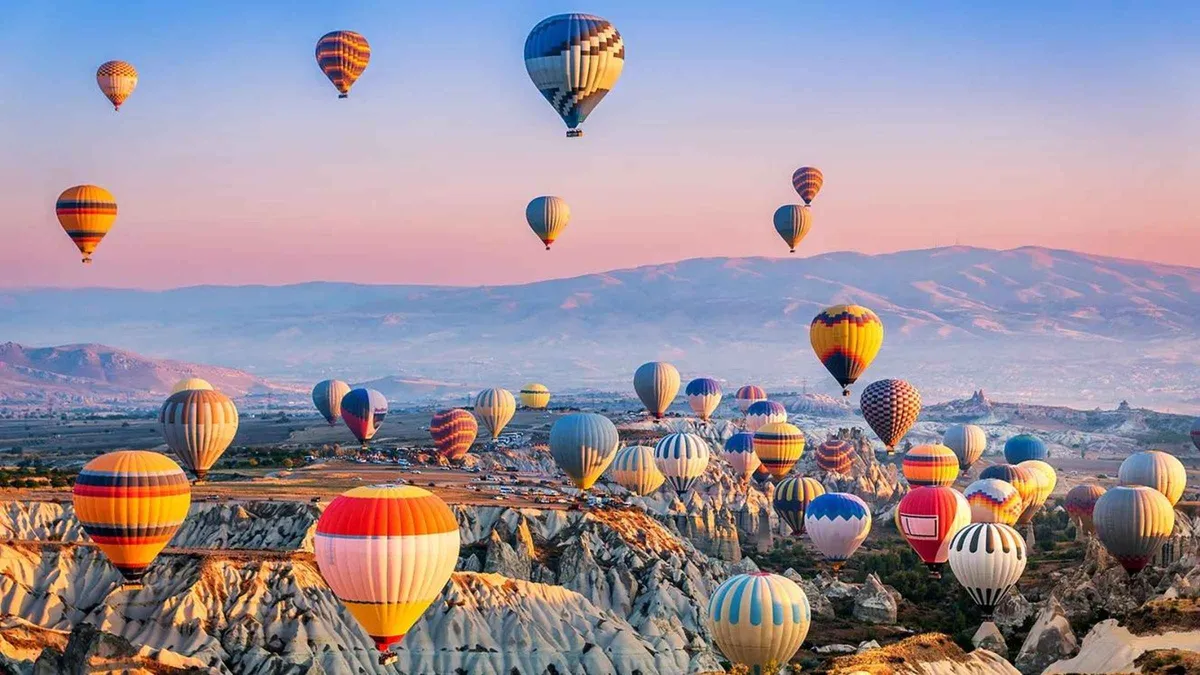 from $103.04
Cappadocia: Göreme Sunrise Balloon Flight Discovery Balloons
The valley classic: about an hour airborne over the Göreme cones at first light, with hotel transfers, breakfast at the field and a certificate after.
Check Availability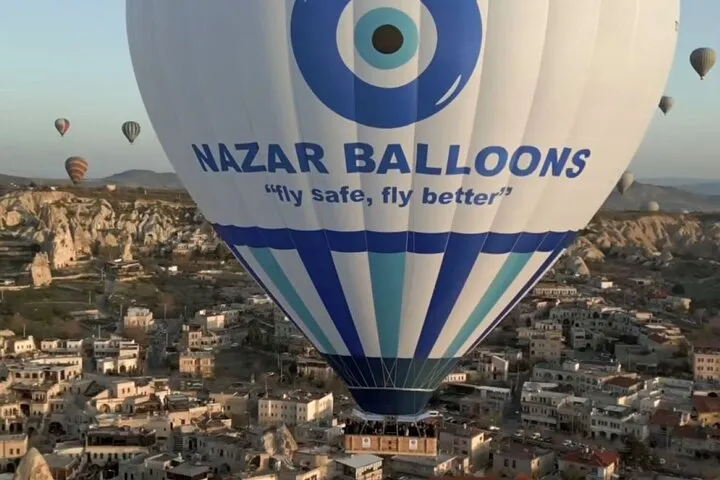 from $90.03
Sunrise Balloon Flight over Göreme — Nazar Balloons
The lowest listed price among the valley's big names, with the same dawn script: hotel pickup, breakfast, about an hour in the air, certificate.
Check Availability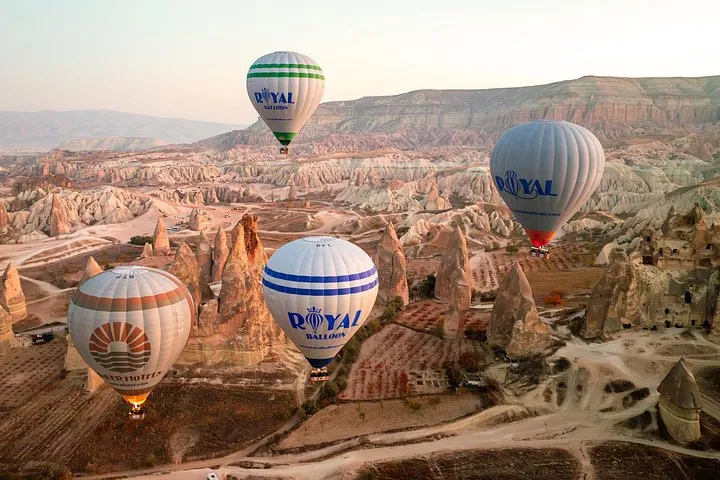 from $128.62
Cappadocia Hot Air Balloon Ride — Royal Balloon
The most-reviewed operator in the valley, with Queen and King basket classes. Mind the $34.59 mandatory on-site extras on top of the listed price.
Check AvailabilityPrices, ratings and details are the platform's own. dollar figures are the listed prices — the platform bills in your account's currency.
Pair The Forecast With The Plan
Best time to visit
Which months give the most cleared dawns, and what the weather does the rest of the day.
The month grid Read the guideGöreme in 2 days
The itinerary built around one cleared dawn, with the museum morning as the built-in plan B.
The plan Read the guideGöreme costs
What the balloon and the spare day cost once the refund rules have done their work.
The budget layer Read the guideBalloon Weather Questions
What percentage of balloon flights are cancelled in Cappadocia?
No official cancellation-rate statistic exists anywhere, which is itself the finding: neither the aviation authority nor any operator publishes one. The only number in circulation is the operators' own claim of about 260 flyable days a year, an operator claim rather than an official statistic. The practical answer is structural: weather cancellations refund in full, and free written cancellation up to 48 hours out lets you rebook to a spare dawn, so even a run of grounded mornings costs you nothing but wake-up calls. Plan two dawns and the unknown rate stops mattering.
Which month is best for a balloon ride in Cappadocia?
By clearance odds, the summer months are strongest, with July and August the driest months of the year at 4.4 mm of rain and stable anticyclone weather producing the most reliable green flags. September and October run close behind with 13.9 mm and 25.2 mm and milder morning temperatures, which many guides consider the best balance overall. March is the wettest month at 55.5 mm, and the winter months ground the most dawns. Every month flies when the flag allows, so the best month is the one matching your tolerance for risk versus crowds.
When do balloons not fly in Cappadocia?
Four no-go archetypes ground a morning: wind above what the responsible pilot judges safe, fog that removes the visibility the launch needs, rain that destabilises the flight, and snow, which in practice grounds crews when it sits on the valves and inflation fields. Thermals end every flying day by mid-morning. No published numeric thresholds exist for any of these. The decision runs through the SHGM representation office and the joint yeşil bayrak green-flag sign-off of the operator and responsible pilot after a meteorological evaluation.
What is the wind limit for balloons in Cappadocia?
No official numeric wind limit is published anywhere, and websites quoting exact figures are guessing. The written regulation, SHT-BALON, sets the decision structure rather than a number: a meteorological evaluation, then a joint decision by the operator and the responsible pilot under the green-flag system, with the SHGM representation office in Cappadocia approving flights across all companies when conditions are within limits. The threshold lives in experienced pilot judgment applied to the specific dawn. The threshold lives in experienced pilot judgment applied to the specific dawn.
Did the balloons go up in Cappadocia today?
Three checks, in order. Look at the sky over Göreme at dawn, since a sky full of envelopes between first light and mid-morning is the confirmation. Check your own operator's message, because every established company confirms or cancels the pickup by message the evening before or in the small hours, and the pickup itself is your go signal. And walk or ride to a launch field viewpoint at dawn, where either inflation crews are at work or the field is empty and silent. No official public flight-status feed exists, so the dawn sky and your operator's message are the real instruments.
Do you get a refund if the Cappadocia balloon is cancelled?
Yes. The operator norm across the valley's established companies, stated plainly in Kapadokya Balloons' FAQ, is a full refund when the flight is cancelled due to weather. Booked through a platform, the refund returns to your card through that platform's process. You also hold your own cancellation right: free written cancellation up to 48 hours before the flight, with the full charge applying inside 24 hours or for a no-show. Always cancel in writing and keep the confirmation, since the 48 hour right depends on it. Terms are set per operator, so confirm on the listing you buy.
Flyable And Grounded Mornings, On Camera
Three films that show both sides of the go/no-go: the dawn that flies and the operation that gets it airborne.
CAPPADOCIA, TURKEY | World's Most Popular Hot Air Balloon Ride
A flyable morning end to end, from dark pickup to landing, the experience the go/no-go governs.
Video: Kara and NateA Guide to Hot Air Ballooning in Cappadocia | Voyager Balloons
The operational view, inflation and crew work that a dawn clearance sets in motion.
Video: GRRRLTRAVELER | Christine KaaloaBeautiful Hot Air Balloons at Sunrise in Cappadocia (TIMELAPSE)
The launch pattern compressed into a timelapse, useful for reading how the fleet uses the stable dawn window.
Video: Jared DillinghamVideos load from YouTube only when you press play.
Prices, hours and terms are set by the venue or operator and confirmed at checkout.
We may earn a commission if you book through one of our links, at no extra cost to you. Full affiliate disclosure